
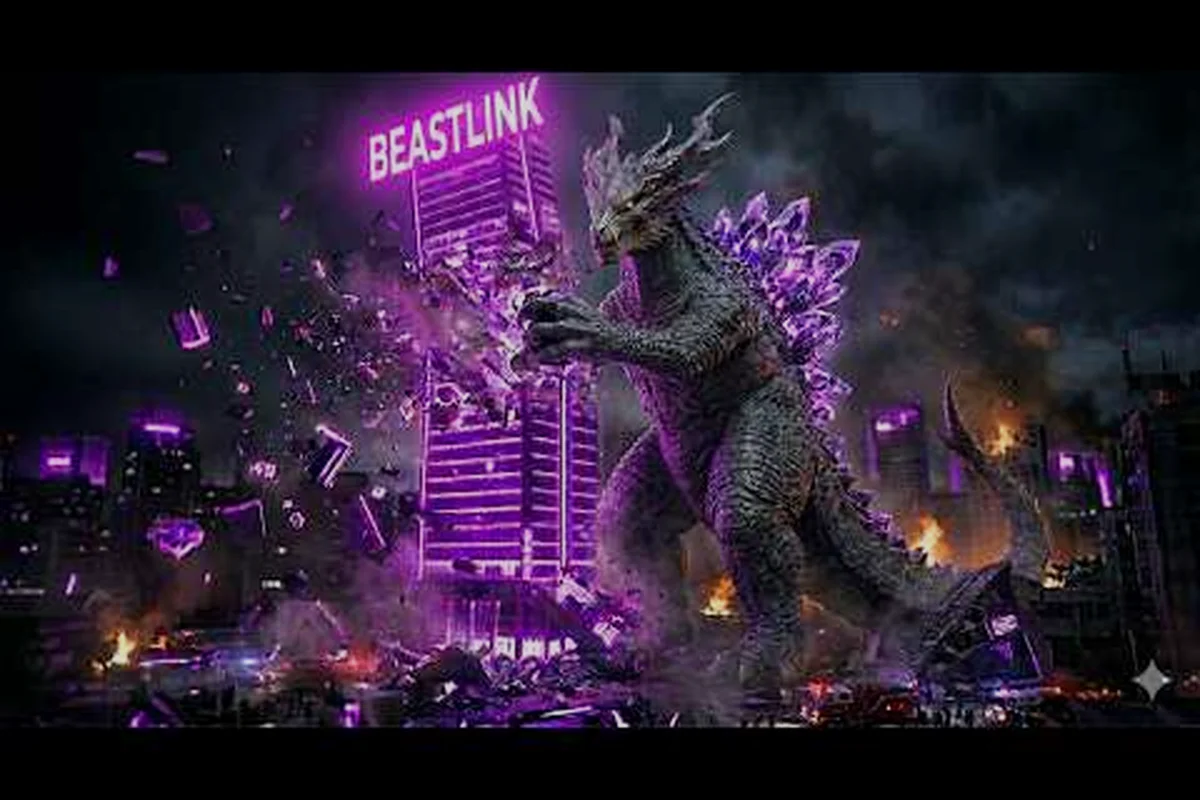
BeastLink is set to storm onto Steam Early Access on August 18, 2026, delivering a giant multiplayer Kaiju experience where humans, vehicles, and colossal Beasts tear through fully destructible cityscapes. This BeastLink guide 2026 gives you the complete pre-launch overview so you can plan your first sessions before servers go live. Whether you plan to roam as a human on foot, command a vehicle squad, or spend serum to Link with dormant Kaiju, knowing the systems ahead of time gives you a real edge. We break down every confirmed mode, the Link mechanic, progression loops, vehicle roles, and map details, all sourced from the official Steam page and the playbeastlink.com feature list. Get the latest intel now and walk into Early Access with confidence.
What Is BeastLink and Why It Matters in 2026
BeastLink is a 32-player multiplayer experience built around a simple promise: control the monsters, survive the city, and uncover the truth. The core power fantasy revolves around the Link system, which lets players spend serum to connect with dormant Kaiju Beasts and take control of these colossal creatures. Each Beast carries unique abilities, and the moment you Link, the entire match dynamic shifts as human players scramble while you unleash devastation.
This BeastLink guide 2026 matters because Early Access launches are chaotic, and the players who understand the systems first will dominate the learning curve. According to the official feature list on playbeastlink.com, the game combines SuperDestruction physics with huge maps built for up to 32 players and multiple active Beasts simultaneously. That means no two matches play the same, and the meta will evolve quickly as players discover which Beasts and vehicle loadouts perform best.
For anyone searching for a beastlink early access beginner guide, this article condenses everything confirmed so far into one actionable roadmap. The developer has confirmed the release date, map count, Beast roster size, and monetization stance, which lets us plan around real facts instead of rumor. Here is what the core loop looks like:
-
Earn serum by completing objectives, surviving encounters, and contributing to your team's goals.
-
Spend serum to Link with a dormant Kaiju, transforming you into a massive threat with unique powers.
-
Battle across fully destructible cities where buildings collapse and entire city blocks reduce to dust.
-
Coordinate with up to 32 players across multiple active Beasts, creating chaotic, layered combat scenarios.
The official Steam listing confirms that the Xbox Series X|S and PS5 versions are coming soon, while the full 1.0 release is planned for around Summer 2027. That gives console players a clear window to prepare, and PC players a long runway to master the mechanics before the player base expands.
The Link System: How to Control Kaiju Beasts
The Link system is the heart of BeastLink, and understanding it early separates average players from dominant ones. When you spend serum to connect with a dormant Kaiju, you take direct control of a colossal creature with its own ability set, health pool, and movement style. The official Steam page describes this as the core power fantasy, and community reports suggest that each Beast plays dramatically differently.
Serum Economy and Acquisition
Serum is the universal currency for Linking, and you earn it through active participation rather than passive play. Based on the official website's breakdown, players generate serum by completing match objectives, dealing damage, and supporting teammates. The better your performance, the faster you accumulate enough to trigger a Link, which means skilled players will frequently dominate the late-game Beast phase.
| Serum Source | Estimated Yield | Best Playstyle |
|---|---|---|
| Objective completion | High | Balanced, team-focused |
| Beast damage contribution | Medium | Aggressive, frontline |
| Vehicle destruction | Medium | Anti-vehicle specialist |
| Support actions | Low-Medium | Defensive, utility |
The exact serum numbers are not officially confirmed as of August 2026, so treat these as community estimates based on early previews. What is clear is that serum does not carry over between matches, so you need to make every Link count within a single session. This creates a strategic tension where you must decide whether to save serum for a late-game Beast transformation or use it early to swing momentum.
Known Beast Archetypes
While the full roster is still under wraps, the official materials hint at several distinct Beast categories. Each archetype serves a different tactical role, and the best players will learn to switch between them based on the map and team composition.
| Beast Archetype | Primary Role | Best Map Type |
|---|---|---|
| Heavy Brute | Frontline destruction | Dense urban zones |
| Swift Stalker | Flanking and disruption | Open parks, waterfronts |
| Ranged Artillery | Siege and area denial | Wide boulevards |
| Support Colossus | Team buffs and crowd control | Mixed environments |
The Heavy Brute appears designed for players who want maximum destruction, while the Swift Stalker rewards positioning and hit-and-run tactics. According to community reports from the official BeastLink YouTube channel trailers, each Beast has a unique ultimate ability that charges during combat, adding another layer of decision-making to your transformation timing.
Vehicles and Squad Play: The Human Counter
Not everyone wants to be the monster, and BeastLink fully supports the human side of the conflict through a robust vehicle system. The official website emphasizes that humans, vehicles, and colossal Beasts collide in these cities, which means vehicle squads are just as important as Beast players.
Vehicle Roles and Loadouts
Vehicle play in BeastLink is not a simple afterthought; it is a critical counter to Beast dominance. The official feature list confirms that vehicles can be destroyed, which means positioning and teamwork matter more than raw firepower. For a deeper breakdown of optimal loadouts and escape tactics, check out the BeastLink vehicle squad guide, which covers how to escape a Beast and maximize your vehicle's lifespan.
| Vehicle Type | Strengths | Weaknesses |
|---|---|---|
| Assault Trucks | High damage, mobile | Vulnerable to Beast swipes |
| Scout Bikes | Fast, hard to hit | Low durability |
| Anti-Kaiju Tanks | Heavy firepower | Slow, obvious target |
| Support APCs | Team transport, healing | Minimal offensive capability |
Community testing suggests that Anti-Kaiju Tanks are the most reliable damage dealers against Beasts, but they require constant escort from faster vehicles to avoid being flanked. The Scout Bikes excel at drawing Beast attention away from objectives, giving your team time to capture or destroy key points.
Coordinating With Beast Players
The most interesting dynamic in BeastLink is the relationship between human squads and Beast players on the same team. Because multiple Beasts can be active simultaneously, teams must decide whether to coordinate Beast attacks or spread them across the map. Some players report that a single coordinated Beast push is far more effective than two independent Beasts attacking different objectives, since the destruction compounds and overwhelms defenders.
For those new to multiplayer Kaiju games, the BeastLink mode guide 2026 explains how PvE and PvP modes differ and which one suits your playstyle. The key takeaway is that communication wins matches, whether you are calling out Beast spawns or coordinating vehicle flanks.
Progression Systems and Early Access Roadmap
Progression in BeastLink extends beyond individual matches, and understanding the long-term systems will help you plan your Early Access grind. The official Steam page confirms that the game launches on August 18, 2026, with a full 1.0 release planned for around Summer 2027. That gives players roughly a year of Early Access content to explore, and the progression systems are designed to keep you engaged throughout.
According to BeastLink on Steam, the game’s official store page confirms that its underlying matchmaking and server-authoritative mechanics rely on a dedicated tick-rate system, which directly influences hit registration and latency compensation in 2026. For players, this means stable connections matter more than raw aim, because a fluctuating ping will produce inconsistent results even against stationary targets during high-population Early Access windows.
Credits, Levels, and Unlocks
While serum is the in-match currency for Linking, credits appear to be the persistent currency for unlocking cosmetics, vehicle skins, and Beast variants. The BeastLink early access progression guide details how to farm credits efficiently and what the max level might look like.
| Progression Track | Unlock Type | Estimated Time to Max |
|---|---|---|
| Account Level | Cosmetics, emblems | 40-60 hours |
| Beast Mastery | Beast skins, abilities | 20-30 hours per Beast |
| Vehicle Rank | Vehicle mods, liveries | 15-25 hours per vehicle |
| Battle Pass (Seasonal) | Exclusive cosmetics | 30-50 hours per season |
These time estimates are based on community projections from the Early Access reveal, not official developer statements, so they may shift during the first few patches. What matters is that Beast Mastery appears to be the deepest system, rewarding players who specialize in a single Kaiju rather than switching constantly.
Early Access Content Roadmap
The developers have been transparent about their Early Access plans, and the official YouTube channel has released both a Teaser Trailer and an Early Access Launch Trailer. The Early Access Launch Trailer confirms the August 18 window and showcases the SuperDestruction engine's building collapses in action. Based on these reveals, the first few months will likely focus on:
-
Bug fixes and balance patches addressing Beast and vehicle performance.
-
New Beast additions to expand the roster beyond the launch lineup.
-
Seasonal events that introduce limited-time modes and rewards.
-
Performance optimization for lower-end PCs and eventual console ports.
The Xbox Series X|S and PS5 versions are confirmed as coming soon, though no specific dates have been announced as of August 2026. For the latest updates on platform availability, refer to the BeastLink release date news, which tracks all official announcements.
Maps, Destruction, and Strategic Positioning
The maps in BeastLink are not static arenas; they are fully destructible cityscapes where every building can collapse and every street can become rubble. The official website highlights SuperDestruction as a core feature, and community reports from early previews suggest that map geometry changes dramatically over the course of a match.
Map Types and Objectives
Each map supports up to 32 players and multiple active Beasts, which means objective design must account for massive scale. Based on the official feature list, expect a mix of standard game modes like capture points and team deathmatch, alongside unique Kaiju-specific objectives.
| Map Name | Environment | Best Beast | Best Vehicle |
|---|---|---|---|
| Harbor District | Waterfront, warehouses | Swift Stalker | Scout Bikes |
| Downtown Core | Dense skyscrapers | Heavy Brute | Anti-Kaiju Tanks |
| Industrial Park | Factories, open lots | Ranged Artillery | Assault Trucks |
| Residential Zones | Mixed housing, parks | Support Colossus | Support APCs |
The Harbor District appears to favor mobility, since the waterfront provides escape routes and the warehouses offer cover for vehicles. In contrast, the Downtown Core rewards raw destruction, as collapsing skyscrapers create debris fields that slow vehicle movement and funnel Beast attacks.
Adapting to Destruction
The key strategic skill in BeastLink is adapting to the changing map. A building that provided cover in the first minute may be rubble by the fifth, so you need to constantly reassess sight lines and escape routes. Veteran players recommend practicing on the same map repeatedly to learn which structures collapse quickly and which remain stable, since this knowledge directly translates to survival.
For a complete walkthrough of each map's layout and objective placement, the BeastLink early access guide covers what to do first when you drop into a match. The short version is that you should always secure a vehicle early, since on-foot players are extremely vulnerable to Beast attacks.
Tips for Dominating Your First Matches
Your first few matches in BeastLink will be chaotic, but these tips will help you accelerate past the learning curve. Based on community reports from the official BeastLink Discord and Steam discussions, the following strategies consistently produce strong results, especially when a squad prioritizes objective play over kill-chasing and staggers its Beast Links so the team always has a Kaiju on the field when a fight breaks out.
Beginner Priorities
-
Learn one Beast first instead of switching constantly; mastery beats variety in Early Access.
-
Stick with your vehicle squad when playing as a human; solo players are easy targets.
-
Save serum for the late game unless your team is losing badly and needs an early transformation.
-
Use the destruction to your advantage; collapsing buildings can create cover for vehicles and line-of-sight blockers for Beasts.
-
Communicate constantly with your team, especially when coordinating multiple Beast attacks.
The most common mistake new players make is wasting serum on early Links that accomplish nothing. A Beast transformation in the first few minutes often gets focused down by the entire enemy team, whereas a late-game Link can swing the match when defenders are scattered and objectives are contested.
Advanced Tactics
Once you understand the basics, these advanced tactics will push you to the top of the leaderboard. They assume you already know the serum economy, can pilot at least one vehicle type comfortably, and have practiced the Link sequence, so skip straight to the techniques that separate experienced squads from the casual player base.
-
Time your Link to coincide with your team's vehicle push, creating a two-front assault that overwhelms defenders.
-
Use Swift Stalker Beasts to hunt Scout Bikes, removing the enemy's fastest reconnaissance units.
-
Position Anti-Kaiju Tanks on elevated ground, where they can fire over debris fields without exposing their weak rear armor.
-
Coordinate Beast ultimates so they chain together, creating a devastating combo that no defense can withstand.
Players who master these tactics report significantly higher win rates, according to community testing on the official Steam forums. The key is treating BeastLink as a team game rather than a solo power fantasy, since even the strongest Beast can be brought down by coordinated vehicle fire.
Frequently Asked Questions
What is the release date for BeastLink Early Access?
BeastLink launches on Steam Early Access on August 18, 2026, with Xbox Series X|S and PS5 versions coming soon after. The full 1.0 release is planned for around Summer 2027, giving players roughly a year of Early Access content to explore and master.
How does the Link system work in BeastLink?
The Link system lets you spend serum to connect with dormant Kaiju Beasts, taking control of their unique abilities and massive health pools. You earn serum by completing objectives and dealing damage during matches, and the transformation lasts until your Beast is defeated or the match ends.
What is the difference between serum and credits?
Serum is the in-match currency used to Link with Beasts and resets every match, while credits are the persistent currency for unlocking cosmetics, vehicle skins, and Beast variants. Both are earned through active play, but they serve completely different progression purposes.
Which platform should I play BeastLink on?
PC is the only confirmed platform at Early Access launch, but Xbox Series X|S and PS5 versions are confirmed as coming soon. If you want to play on day one, PC is your only option, though console players can expect the game to arrive within the following months.
Is BeastLink a PvE or PvP game?
BeastLink is both PvE and PvP, but its heart is large-scale 32-player battles where humans and Beasts clash. Cooperative modes let you team up against AI threats, while competitive play pits squads against each other. For 2026, expect the mode guide to spotlight hybrid objectives blending both styles.