
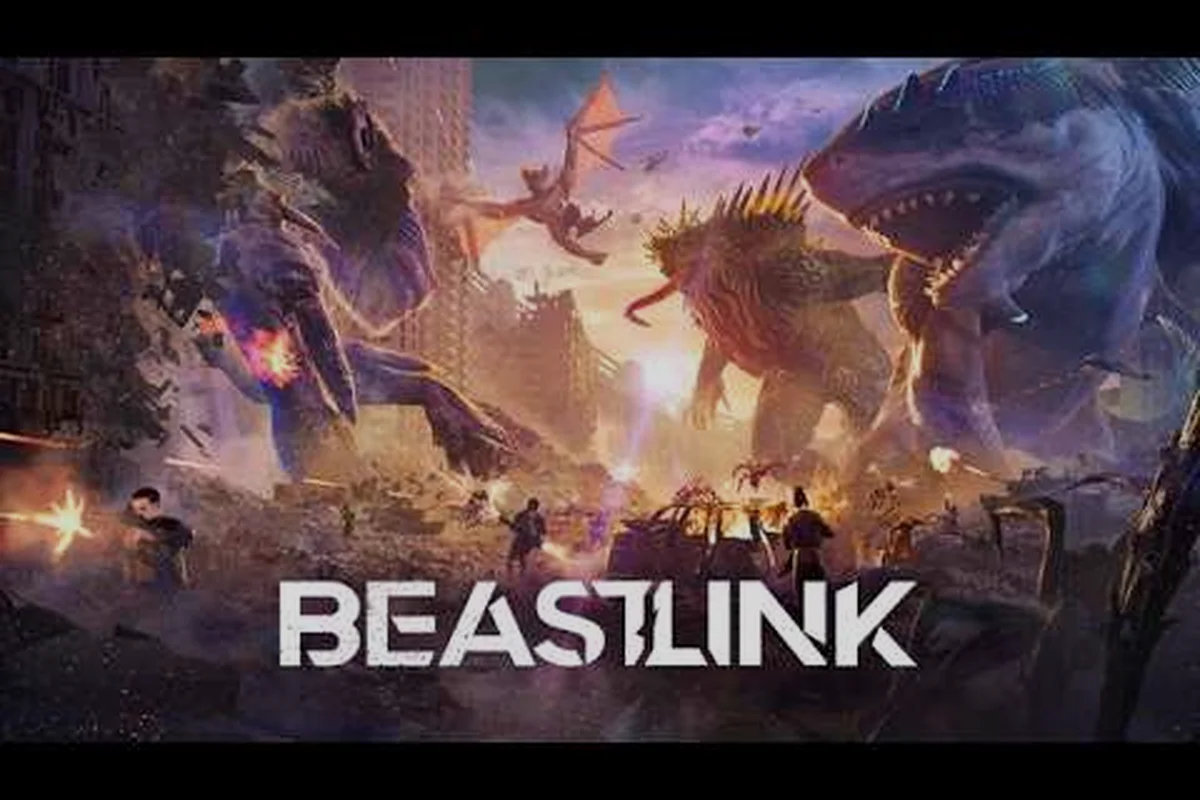
The BeastLink link system sits at the heart of every match, deciding whether you spend the final minutes as a human survivor or a city-leveling Kaiju. Understanding how serum flows into your Link meter is the difference between watching the endgame from a rooftop and becoming the reason that rooftop collapses. This guide breaks down the entire loop—earning serum, spending it on dormant Beasts, and how those choices accelerate your character progression and Beast unlocks across matches. The Beastlink system rewards consistent play, and for a deeper dive into how ranks and rewards scale, check out our full guide on Beastlink Progression Explained.
The Link System Core: How Serum Becomes a Kaiju
Every BeastLink match begins with you as a human soldier, but the objective is always the same: earn enough serum to take control of a dormant Kaiju. The BeastLink link system operates on a simple economy—actions generate serum, serum fills your Link meter, and a full meter lets you dominate the battlefield as a colossal Beast. What makes this system compelling is that your human performance directly determines your Beast potential, so there is no shortcut to the monster phase without first proving yourself on the ground.
According to the official BeastLink Steam page, you earn serum by destroying targets, securing objectives, and contributing to your squad. The game rewards aggressive, objective-focused play rather than passive survival, which means camping in a building rarely fills your Link meter. Instead, you need to push toward contested zones, demolish structures, and support your teammates in firefights to generate the serum required for a transformation.
Serum Generation Rates by Action Type
The exact serum values shift with balance patches, but community testing has established a clear hierarchy of what generates the most serum per minute. Based on player reports from the Early Access period, the following table breaks down typical serum yields:
| Action | Serum Yield | Risk Level | Best Use Case |
|---|---|---|---|
| Destroying buildings | High | Medium | Fast meter fill while controlling map flow |
| Securing objectives | Medium-High | High | Squad play with contested zones |
| Squad assists and revives | Medium | Low | Support roles that stay alive longer |
| Infantry kills | Low-Medium | Medium | Aggressive play, but inefficient alone |
| Vehicle kills | Medium | High | High skill ceiling with strong payoff |
The pattern here is clear: structure destruction offers the most reliable serum income because buildings are plentiful and cannot shoot back. Players who focus on demolition rather than infantry duels typically Link first, which gives their squad a massive tempo advantage. That said, objectives provide a more consistent flow when the enemy team contests them, so the best approach combines both strategies rather than committing to a single source.
The Dormant Beast Selection
When your Link meter fills, you do not instantly transform—you enter a selection phase where you choose which dormant Kaiju to control. The BeastLink how to unlock beasts system works through this selection screen, showing you the Beasts you have unlocked through account progression and letting you pick based on the current match state. If your squad needs a tanky frontline, you grab a heavy Brawler; if the enemy team is scattered, a fast Striker can clean them up before they regroup.
This decision layer adds a strategic dimension that most multiplayer games lack, because the same player can fill completely different roles depending on which Beast they choose. A player who spent the first half of the match supporting with revives can suddenly become the team's primary damage dealer, which keeps the BeastLink link system fresh even after dozens of matches. The selection phase also creates a brief moment of counterplay, as the enemy team sees which Beast you are considering and can adjust their vehicle loadouts accordingly.
How to Get Serum Efficiently: Farming Routes That Work
The BeastLink how to get serum question dominates every new player discussion, and the answer is more nuanced than simply "destroy everything." While demolition is the fastest path, the best serum farming routes depend on your squad composition and the map you are playing. On the Downtown District map, for example, the dense cluster of skyscrapers near the center offers incredible destruction value, but contesting that area puts you in the crossfire of multiple enemy squads.
A more reliable approach is to establish a demolition rotation with your squad: you clear one block of buildings, move to the next objective, then circle back to the first area after the enemy team has moved on. This keeps your serum income steady while minimizing direct confrontation, which is especially valuable in the early game when you lack the firepower to win extended fights. Community data suggests that squads running this rotation consistently Link two to three minutes faster than teams that chase kills across the map.
Serum Efficiency by Squad Role
Your role in the squad dramatically changes how you should approach serum generation. A dedicated support player who focuses on revives and suppression will generate serum more slowly than a demolition specialist, but they will also die less often, which means their Link meter never resets. The following table compares the serum efficiency of different squad roles based on player-reported data:
| Squad Role | Primary Serum Source | Average Link Time | Survival Rate |
|---|---|---|---|
| Demolition Specialist | Building destruction | 6-8 minutes | Medium |
| Objective Contester | Point captures | 7-9 minutes | Low-Medium |
| Support Medic | Assists and revives | 9-11 minutes | High |
| Vehicle Hunter | Vehicle kills | 8-10 minutes | Medium |
| Hybrid Flex | Mixed actions | 7-9 minutes | Medium-High |
The support medic role is the most consistent serum earner because revives and assists generate a steady trickle without requiring you to expose yourself to enemy fire. While you Link slower than a demolition specialist, you also avoid the death penalty that resets your progress, which makes you more reliable in chaotic matches. For solo players, the hybrid flex role works best because it adapts to whatever opportunities the match presents rather than forcing a single playstyle.
Common Serum Mistakes That Slow You Down
Many players unintentionally sabotage their own serum generation by making avoidable mistakes. The most common error is overcommitting to infantry fights that drag on without producing kills or objective progress. Every minute you spend trading shots with a sniper across the map is a minute you are not destroying buildings or securing points, and that opportunity cost adds up quickly.
Another frequent mistake is ignoring the death penalty—when you die, you lose a portion of your accumulated serum, which can set your Link timer back by several minutes. Aggressive players who push into contested zones without support often find themselves stuck in a cycle of dying and re-earning the same serum, never actually reaching the Beast phase. The solution is to play conservatively until you have a comfortable serum buffer, then take calculated risks to top off your meter.
BeastLink Progression Guide: How Matches Feed Account Growth
The BeastLink progression guide extends beyond individual matches, because every Link you perform contributes to your account-level progression. Each match awards experience points based on your performance, and those XP points level up your account, unlocking new Beasts, weapons, and vehicles for future matches. This creates a satisfying loop where the BeastLink link system is not just a match mechanic but also a progression driver.
According to the official BeastLink website, the game features a skill tree and character builds that let you customize your human soldier between matches. The BeastLink character progression system rewards you for playing different roles, encouraging experimentation rather than locking you into a single playstyle. This design choice keeps the game fresh because you can always pivot to a new build without feeling like you wasted your earlier progression.
Account Progression Tiers and Unlock Requirements
The account progression system in BeastLink follows a tiered structure, with each tier unlocking new content and raising the ceiling for your in-match performance. Based on community data from the Early Access period, the following table outlines the typical unlock progression:
| Account Level | Unlock Tier | New Content | Progression Focus |
|---|---|---|---|
| 1-10 | Foundation | Starter Beasts, basic weapons | Learn core mechanics |
| 11-20 | Tactical | Advanced weapons, first vehicle | Expand combat options |
| 21-30 | Specialist | Mid-tier Beasts, vehicle upgrades | Specialize in a role |
| 31-40 | Veteran | High-tier Beasts, elite vehicles | Optimize loadouts |
| 41-50 | Legend | Endgame Beasts, prestige options | Master the link system |
The BeastLink leveling guide for new players should focus on reaching level 20 as quickly as possible, because that is when the game opens up with meaningful build variety. The first ten levels serve as a tutorial period where you learn the basics, but the real depth emerges when you can start combining weapon unlocks with Beast choices. Players who rush through the early levels with a single playstyle often miss out on the strategic depth that makes BeastLink unique.
How the Link System Accelerates Account Progression
Here is where the BeastLink link system and account progression intersect: performing Links grants bonus XP that accelerates your account leveling. The game rewards you for reaching the Beast phase, even if you do not perform well as the Kaiju, because the act of Linking demonstrates mastery of the core loop. This means players who focus on efficient serum generation will level their accounts faster than those who treat the Beast phase as optional.
The BeastLink kaiju progression system adds another layer, because each Beast you control earns its own experience and levels up independently. A Beast that performs well in matches unlocks cosmetic variations and minor stat boosts, which gives you a reason to rotate through different Kaiju rather than sticking with one dominant pick. This dual progression—account level and individual Beast level—creates a satisfying sense of growth that persists across matches.
Character Progression and Build Synergy with the Link
The BeastLink character progression system is not just about unlocking content—it is about building a soldier that complements your preferred Beast playstyle. If you favor tanky Brawler Beasts that soak damage, you want a human loadout that emphasizes survivability and objective control during the early game. Conversely, if you prefer fast Striker Beasts that hunt vehicles, your human build should focus on mobility and anti-vehicle weapons to soften targets before you transform.
This synergy between human and Beast builds is what separates good BeastLink players from great ones, because it shows an understanding of the full match arc rather than just one phase. The BeastLink link system rewards this holistic thinking by making your human performance the foundation for your Beast potential, so a well-built soldier makes your Kaiju phase stronger from the start.
Recommended Builds by Beast Preference
The following table outlines recommended human builds based on your preferred Beast archetype, based on community testing and player reports:
| Beast Preference | Human Loadout | Skill Tree Focus | Early Game Strategy |
|---|---|---|---|
| Brawler (Tank) | Shotgun, medkits | Survivability, armor | Hold objectives, absorb damage |
| Striker (Fast) | SMG, rocket launcher | Mobility, vehicle damage | Hunt vehicles, flank enemies |
| Zone Controller | LMG, grenades | Suppression, area denial | Control chokepoints, deny pushes |
| Support (Healer) | Assault rifle, stims | Revive speed, team buffs | Stay with squad, keep them alive |
The skill tree synergy between your human build and Beast choice is often overlooked by new players, but it dramatically impacts your effectiveness. A player who builds for vehicle hunting on the human side will enter the Beast phase with more experience reading vehicle movements, which translates to better target prioritization as a Kaiju. This cross-phase learning is one of the most satisfying aspects of the BeastLink link system, because improvement in one area compounds into success in another.
The Death Penalty and Build Resilience
Every build needs to account for the death penalty, which resets a portion of your serum progress when you fall in battle. This mechanic punishes glass-cannon builds that rely on aggressive positioning, because one mistake can erase several minutes of serum accumulation. The most resilient builds prioritize survivability without sacrificing too much utility, striking a balance that keeps you alive long enough to reach the Beast phase.
For new players, the BeastLink progression guide recommends starting with a survivability-focused build before experimenting with high-risk, high-reward options. This approach teaches you the flow of matches without the frustration of constantly losing serum progress to deaths. Once you understand the rhythm of serum generation, you can gradually shift toward more aggressive builds that maximize your impact in both phases.
Advanced Link Strategies for Experienced Players
Once you have mastered the basics of the BeastLink link system, you can start exploring advanced strategies that give your squad a competitive edge. The most impactful technique is delayed Linking, where you intentionally hold your serum instead of transforming at the first opportunity. This strategy works because the Beast phase lasts a fixed duration, so transforming at the right moment—rather than the earliest moment—can swing a match more decisively.
The BeastLink kaiju progression system rewards this patience, because a well-timed Link can catch the enemy team in a vulnerable position, such as when they are clustered around an objective or mid-rotation across the map. According to community reports, squads that coordinate their Link timing can create a devastating one-two punch, where the first Beast forces the enemy to expend anti-Beast resources and the second Beast arrives when those resources are depleted.
Coordinated Link Timing with Your Squad
The most advanced Link strategy involves synchronizing multiple Links within your squad to create an unstoppable push. If two or three players transform simultaneously, the enemy team faces multiple Kaiju with no way to focus their counter-Beast weapons effectively. This strategy requires strong communication and careful serum management, because you need all players to reach full Link meters at roughly the same time.
The trade-off is that coordinated Links leave your squad without human players for the duration of the Beast phase, which can be dangerous if the enemy team has a strong vehicle presence. The best squads balance this risk by having one player hold their Link as a reserve while the others transform, creating a staggered assault that keeps constant pressure on the enemy. This advanced tactic is difficult to execute but devastating when pulled off correctly, which is why it dominates high-level play.
Countering Enemy Links and Beast Threats
The BeastLink link system is not just about your own progression—it is also about denying the enemy team their Beast phase. One of the most effective counter-strategies is targeting players with high serum accumulation, since killing them resets their progress and delays their transformation. This requires reading the scoreboard and identifying which enemies are closest to their Link meter, then focusing them with your squad's firepower.
Vehicle players have a special role in this counter-strategy, because anti-Beast weapons like rocket launchers and tank shells can force a Beast to retreat or burn its abilities defensively. The BeastLink official YouTube channel showcases several matches where well-coordinated vehicle squads prevented the enemy team from ever establishing Beast dominance, proving that the human phase is just as important as the Kaiju phase. Understanding both sides of the Link equation is the mark of a truly advanced player.
Frequently Asked Questions
How does the BeastLink link system work?
The BeastLink link system works by rewarding you with serum for destroying targets, securing objectives, and supporting your squad. When your serum meter fills, you enter a selection phase to choose a dormant Kaiju Beast to control. Your performance as a human directly determines how quickly you reach the Beast phase.
What is the fastest way to get serum in BeastLink?
The fastest way to get serum is by destroying buildings and structures, which provides the highest serum yield per action. Combining demolition with objective captures creates a steady flow that fills your Link meter faster than infantry kills alone. Squad coordination on demolition rotations produces the most consistent results.
How do I unlock new Beasts in BeastLink?
You unlock new Beasts by leveling up your account through match experience points. Each account level tier unlocks new Beasts, weapons, and vehicles, with higher tiers requiring more XP. The BeastLink kaiju progression system also levels individual Beasts, unlocking cosmetic variations and minor stat boosts for your favorites.
Does dying reset my serum progress?
Yes, dying resets a portion of your accumulated serum, which delays your Link transformation. This death penalty punishes aggressive play that ignores survivability, so balancing risk and reward is essential. Players who die frequently will find themselves stuck in a cycle of re-earning the same serum without ever reaching the Beast phase.
Can I choose which Beast to control when I Link?
Yes, when your Link meter fills, you enter a selection phase where you choose from your unlocked Beasts. This decision should be based on the current match state, your squad composition, and the enemy team's positioning. The best players adapt their Beast choice to counter the enemy's strategy rather than always picking their favorite.