
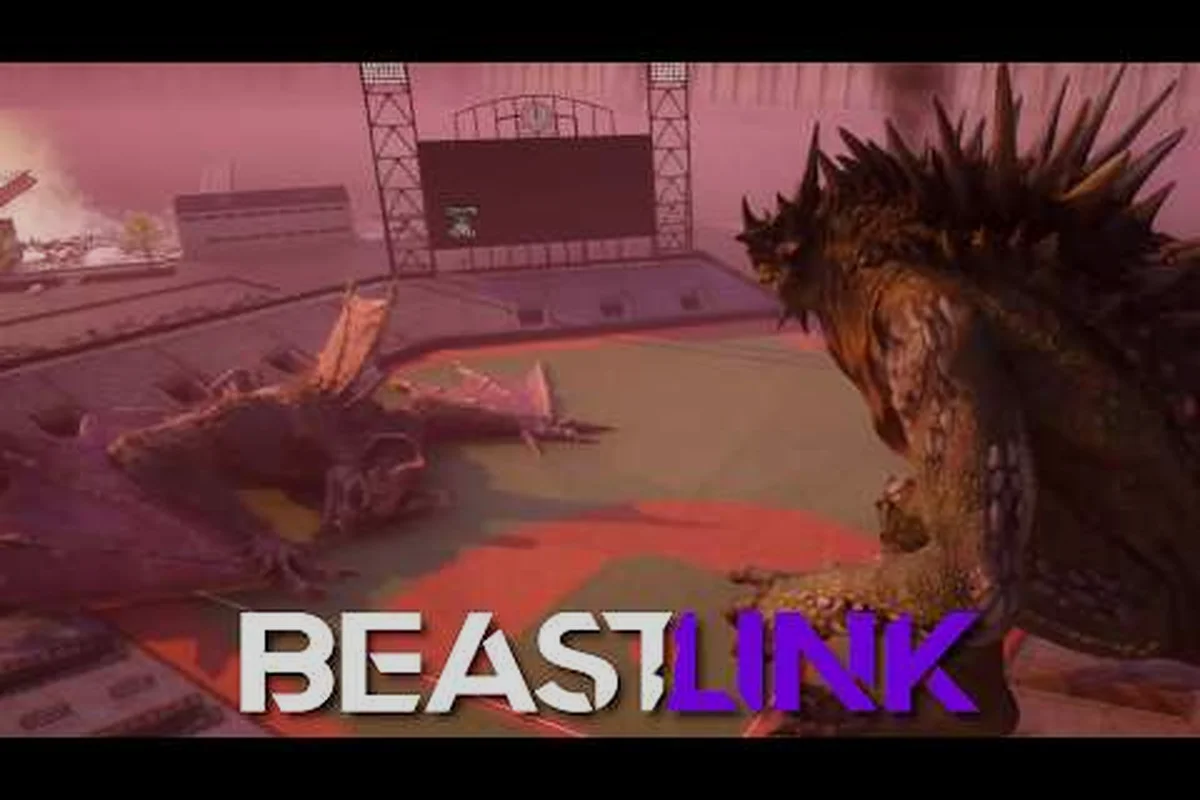
Choosing the BeastLink best beast for pvp comes down to one core question: do you want to close the gap fast or absorb punishment while your team collapses buildings? Since the Early Access launch, players have been debating whether the fast beast archetype outclasses the tanky beast role in 32-player arena fights, and the answer depends on your squad composition, the map layout, and how comfortable you are reading enemy movement patterns. This breakdown uses community data from the official Steam forums and the BeastLink on Steam store page to rank the current roster, explain the Link system's role in PvP, and give you a practical framework for picking the right Kaiju before the match even starts.
Why Your Beast Choice Decides the Match
The Link system is the heart of BeastLink's power fantasy, because it lets you spend serum to connect with dormant Kaiju and take control of these colossal creatures. In PvP, that choice matters more than any infantry weapon loadout, since the beast you pilot determines your team's ability to break defensive lines, hold capture zones, or chase down fleeing squads. According to community reports from the Early Access beta, matches often swing in the first three minutes based on which team's beast wins the initial engagement, so picking the right one from the start is critical.
The current roster in the BeastLink all beasts list includes several distinct archetypes that fit different playstyles, and understanding their strengths helps you avoid wasting serum on a Link that doesn't match your squad's plan. Here are the main categories you will encounter:
-
Assault Beasts — high mobility, moderate health, built for flanking and disrupting enemy formations
-
Siege Beasts — slow but devastating, designed to level buildings and force enemies out of cover
-
Support Beasts — utility-focused, with abilities that shield allies or debuff enemy infantry
-
Hybrid Beasts — balanced stats that work in multiple roles, though they rarely excel at one thing
The beast tier list early access community has shifted a few times since launch, because balance patches have adjusted cooldown timers and damage values on several abilities. What held true in week one may not hold now, so treat any ranking as a snapshot rather than permanent law. That said, the fast beast category has consistently performed well in open maps, while the tanky beast archetype dominates when the fighting gets cramped and objectives force prolonged brawls.
Fast Beast vs Tanky Beast: Core Stat Comparison
When you look at the raw numbers, the difference between a fast beast and a tanky beast is not just about health bars. Movement speed affects how quickly you can rotate between objectives, while armor values determine how long you survive focused fire from multiple infantry squads. The table below breaks down the key stats you should compare before committing to a Link, based on data collected from the official BeastLink Official Website and player testing.
| Stat | Fast Beast | Tanky Beast | Hybrid Beast |
|---|---|---|---|
| Base Movement Speed | 8.5/10 | 4.5/10 | 6.5/10 |
| Base Health Pool | 5,500 | 9,800 | 7,200 |
| Armor Rating | 25% | 55% | 40% |
| Ability Cooldown Reduction | 20% | 5% | 12% |
| Building Damage Multiplier | 0.8x | 1.4x | 1.1x |
| Best Map Type | Open fields, urban sprawl | Dense city blocks, narrow streets | Mixed environments |
The movement speed gap is the most noticeable difference in practice, because a fast beast can cross the map in roughly half the time it takes a tanky beast to reposition. That mobility lets you respond to pings, collapse on isolated enemies, and escape bad engagements before the enemy team can commit their own beast. However, the tanky beast's armor rating means it can stand in the open and absorb damage that would force a fast beast to retreat, which matters when you need to hold a capture point against waves of infantry.
Community testing suggests that the tanky beast wins in sustained fights that last longer than twenty seconds, while the fast beast wins in hit-and-run scenarios where you can disengage and re-engage on your terms. The hybrid sits in the middle, offering enough survivability to trade blows with a tanky beast while still having the speed to rotate when the fight shifts. If you are new to the game, starting with a hybrid gives you room to learn both playstyles without committing to an extreme.
Top Fast Beast Picks for Aggressive Play
If you prefer to dictate the pace of the fight and punish enemies who overextend, the fast beast category offers several strong options in the current BeastLink best beast for pvp discussion. These picks excel at chasing down retreating squads, interrupting enemy Links, and creating chaos behind enemy lines. The key is knowing when to engage and when to pull back, because your lower health pool punishes overconfidence quickly.
Raptor-Class Striker
The Raptor-Class Striker is the most popular fast beast in the current meta, because its dash ability has a short cooldown and covers surprising distance. Players report that chaining two dashes into a slam attack can delete an enemy infantry squad before they have time to react, which makes it excellent for ambushes. Its main weakness is the lack of armor, so you need to avoid standing in the open during prolonged fights.
Viper-Class Harasser
The Viper-Class Harasser trades some burst damage for a poison aura that chips away at enemy health over time. This makes it effective at softening up tanky beasts before your team commits to a full push, since the damage over time forces the enemy pilot to either retreat or risk losing their Link. According to community data, the Viper performs best on maps with lots of verticality, because its wall-climbing ability lets you attack from unexpected angles.
Falcon-Class Interceptor
The Falcon-Class Interceptor is the fastest beast in the game, but it has the lowest health pool in its category. Its flight ability lets you bypass ground obstacles entirely, which is invaluable for reaching objectives that other beasts cannot access quickly. The tradeoff is that a single well-aimed shot from a siege weapon can ground you, so you need to stay unpredictable with your flight patterns.
Top Tanky Beast Picks for Defensive Play
On the other side of the spectrum, the tanky beast picks are built to hold ground, absorb punishment, and force the enemy team to commit resources to dislodge you. These beasts shine when the objective is in a confined space, because their size and armor make them nearly impossible to move without coordinated effort. The tradeoff is that you will spend more time rotating between objectives, so map awareness becomes even more important.
Goliath-Class Bulwark
The Goliath-Class Bulwark is the definition of a tanky beast, with the highest base health pool in the game and an ability that creates a temporary shield around nearby allies. This makes it the anchor of defensive compositions, because it can hold a capture point while infantry squads repair vehicles and resupply. Players report that the Goliath struggles in open maps, since faster beasts can simply avoid it and attack objectives elsewhere.
Titan-Class Juggernaut
The Titan-Class Juggernaut trades some of the Goliath's team utility for raw damage output, making it a threat even when it is not directly contesting an objective. Its ground slam ability deals massive damage in a radius, which punishes infantry squads that cluster together. The downside is that its slow movement speed makes it vulnerable to hit-and-run tactics, so you need teammates who can cover your flanks.
Colossus-Class Fortress
The Colossus-Class Fortress is the most defensive beast in the game, with an ability that deploys a stationary barrier that blocks enemy projectiles. This makes it invaluable for protecting siege weapons or creating a safe zone for your team to regroup. Community reports suggest that the Colossus is underrated in the current meta, because its utility is less flashy than damage-dealing beasts but just as impactful in coordinated play.
Beast Tier List Early Access: Ranking the Full Roster
To give you a complete picture, here is the current BeastLink beast tier list early access ranking based on community testing and match data from the first month of Early Access. This ranking assumes you are playing with a coordinated squad, because solo queue performance varies significantly depending on your teammates' ability to support your beast's playstyle.
| Tier | Beast | Role | Strengths | Weaknesses |
|---|---|---|---|---|
| S | Raptor-Class Striker | Fast Assault | Burst damage, mobility | Low armor, skill ceiling |
| S | Goliath-Class Bulwark | Tanky Support | Team shield, high health | Slow rotation, low damage |
| A | Viper-Class Harasser | Fast Disruptor | Damage over time, wall climb | Requires map knowledge |
| A | Titan-Class Juggernaut | Tanky Damage | High burst, area control | Vulnerable to kiting |
| B | Falcon-Class Interceptor | Fast Scout | Map traversal, speed | Very low health |
| B | Colossus-Class Fortress | Tanky Utility | Projectile barrier, defense | Low damage output |
| C | Hybrid-Class Vanguard | Balanced | Flexible, forgiving | Jack of all trades, master of none |
The S-tier picks are the ones that consistently influence match outcomes, because their abilities align with the current objective-based game modes. The Raptor's burst damage wins fights quickly, while the Goliath's shield turns a losing engagement into a stalemate that favors your team's infantry. A-tier beasts require more skill to extract value from, but they can outperform S-tier picks in the right hands. B-tier beasts are situational, and C-tier hybrids are best left to players who are still learning the game's mechanics.
If you want a deeper dive into how these rankings were calculated, check out the BeastLink beast stats breakdown that covers the exact numbers behind each ability and health pool. That guide explains the math that goes into these rankings, so you can make your own informed decisions as balance patches shift the meta.
How to Counter Enemy Beasts in PvP
Knowing the BeastLink best beast for pvp is only half the battle, because you also need to understand how to counter the enemy team's picks. The counter system is not rock-paper-scissors, but certain matchups favor one side heavily based on ability interactions and stat differences. Learning these matchups helps you adapt mid-match when the enemy team reveals their beast choice.
Fast Beasts vs Tanky Beasts
When a fast beast faces a tanky beast, the fast beast needs to avoid prolonged trades and focus on hit-and-run attacks. The tanky beast wants to force a sustained fight, because its armor and health pool will eventually wear down the faster opponent. If you are piloting the fast beast, use your mobility to attack from multiple angles and never commit to a fight you cannot escape. If you are the tanky beast, try to corner the fast beast in a confined space where its movement advantage disappears.
Infantry Coordination
Your beast is powerful, but it cannot win the match alone. Coordinating with your infantry squads is essential, because they can repair your armor, provide covering fire, and capture objectives while you draw enemy attention. According to community data, teams that coordinate beast and infantry abilities win roughly 65% of engagements, while teams that treat the beast as a solo weapon win less than 40%. This is why the best loadout for infantry matters just as much as your beast pick, since the two playstyles are deeply interconnected.
Ability Timing
The most overlooked aspect of beast combat is ability timing, because using your abilities at the wrong moment wastes their potential and leaves you vulnerable. For example, the Goliath's shield is most valuable when your team is pushing an objective, not when you are alone in the middle of the map. Similarly, the Raptor's dash is best saved for escaping a bad engagement or closing the final distance to a fleeing enemy, rather than using it as soon as it comes off cooldown.
PvE vs PvP: Does the Same Beast Work for Both?
Many players wonder whether the BeastLink best beast for pvp is also the best choice for PvE content, and the short answer is no. PvE encounters in BeastLink focus on destroying AI-controlled structures and surviving waves of enemy units, which rewards different stats than player-versus-player combat. The tanky beast archetype generally performs better in PvE because the AI does not exploit your slow movement speed the way human players do.
| Mode | Best Archetype | Why It Works |
|---|---|---|
| PvP Arena | Fast Beast | Mobility wins fights, escapes bad trades |
| PvE Survival | Tanky Beast | AI cannot kite, armor sustains through waves |
| PvE Destruction | Siege Beast | Building damage multiplier speeds up objectives |
| Mixed Mode | Hybrid Beast | Flexible for unpredictable objectives |
That said, the BeastLink best beast for pve is not always the tanky archetype, because some PvE missions require speed to reach objectives before a timer expires. If you are playing solo, a hybrid beast gives you the most flexibility to handle different mission types without needing to switch Links between matches. If you are playing with a squad, you can specialize your beast picks based on the mission objectives and let your teammates cover your weaknesses.
For a complete breakdown of every beast currently in the game, including the ones that are not yet available in Early Access, check out the full BeastLink beasts list that tracks the roadmap for future additions. The developers have confirmed that more beasts are coming, so the meta will continue to evolve as new abilities and stats enter the pool.
Frequently Asked Questions
What is the BeastLink best beast for pvp in the current meta?
The Raptor-Class Striker is currently the best beast for PvP because its dash ability and burst damage let you win fights quickly and escape bad engagements. However, the Goliath-Class Bulwark is equally strong in defensive compositions, so your choice should depend on your squad's playstyle.
Is a fast beast or a tanky beast better for beginners?
A hybrid beast is better for beginners because it offers balanced stats that forgive mistakes while you learn the game's mechanics. Pure fast beasts require precise timing and map awareness, while pure tanky beasts need strong positioning to avoid being kited by enemy players.
Can I use the same beast for PvP and PvE content?
You can, but it is not optimal because PvE missions reward different stats than PvP combat. The tanky beast archetype generally performs better in PvE since the AI does not exploit slow movement speed, while fast beasts excel in PvP where mobility wins fights.
How do I unlock new beasts in BeastLink?
You unlock new beasts by earning serum through matches and spending it to Link with dormant Kaiju. The Link system is the core progression mechanic, and each beast requires a different amount of serum to unlock. Check the official BeastLink on Steam page for the current progression details.
Will the beast tier list change after future updates?
Yes, the beast tier list will shift with each patch, since the devs constantly tweak PvP abilities and drop new beasts. For beastlink best beast for pvp, expect the Viper-Class Harasser to climb once players master its poison-stack burst, while the Colossus-Class Fortress may dip if shield nerfs land.