
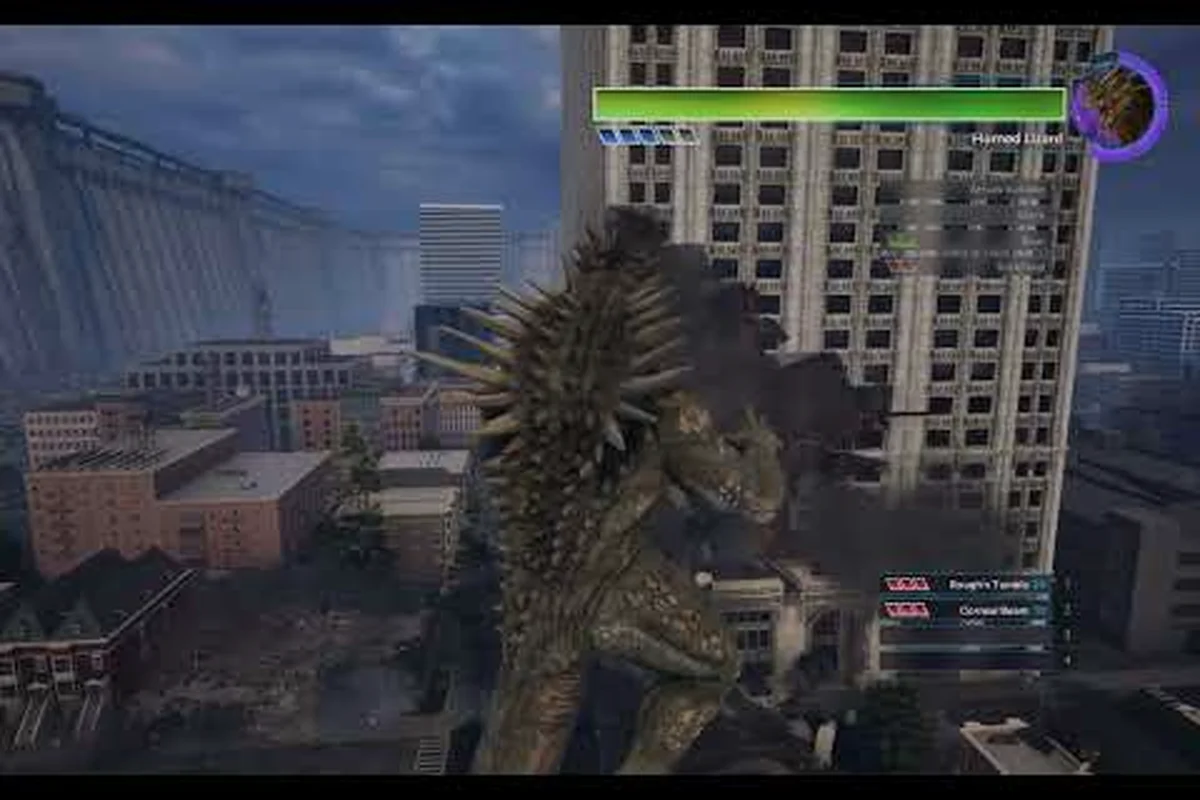
The BeastLink map rotation determines which battleground you drop into, and understanding it can mean the difference between a flawless SuperDestruction run and a frustrating defeat. Because the current Early Access build rotates through a limited pool of arenas, knowing each map's layout, destruction hotspots, and spawn logic gives you a measurable advantage before the match even starts. This guide breaks down the active rotation, the confirmed 12-map 1.0 lineup, and the community-reported quirks you need to watch for.
What makes the BeastLink map rotation particularly important right now is that the developer has confirmed a massive expansion from the current three-map pool to twelve fully realized city zones built around three real-world metropolitan inspirations. That means the strategies you develop today for the Downtown District or Industrial Outskirts will carry forward, while entirely new hot zones will demand fresh approaches. Whether you're a solo player hunting serum or a squad coordinating vehicle strikes, this rotation guide gives you the tactical foundation to dominate every arena.
Current BeastLink Map Rotation: The Three Early Access Arenas
The BeastLink map rotation in Early Access currently cycles through three distinct battlegrounds, each designed around a different combat philosophy. According to the official BeastLink Steam page, these maps support up to 32 players with multiple active Beasts, which means rotation timing directly affects how crowded your landing zone will be. Understanding the current rotation helps you predict enemy density, vehicle availability, and Beast spawn patterns before you commit to a strategy. The three maps currently in rotation are Downtown District, Industrial Outskirts, and Coastal Ruin. Each one offers a different balance of verticality, cover density, and destruction potential, which we break down in the table below.
| Map | Primary Terrain | Best For | Destruction Potential | Vehicle Access |
|---|---|---|---|---|
| Downtown District | Dense urban blocks | Beast rampages, close-quarters | Extreme — full block collapse | Moderate |
| Industrial Outskirts | Open factories, warehouses | Vehicle combat, long sightlines | High — structural chain reactions | High |
| Coastal Ruin | Beachfront, collapsed structures | Mixed engagements, ambush play | Moderate — partial collapses | Low |
The BeastLink map rotation currently favors Downtown District as the most frequently appearing arena, based on community reports from the Early Access launch period. Players have noted that this map appears roughly 40% of the time, while Industrial Outskirts and Coastal Ruin split the remaining matches almost evenly. If you're grinding serum efficiently, planning around this rotation frequency can help you optimize your loadout choices.
Downtown District: The SuperDestruction Showcase
Downtown District is where the BeastLink superdestruction mechanic truly shines, because the dense vertical architecture creates spectacular chain-collapse opportunities. When you Link with a Beast here, every building becomes a potential weapon, and skilled players can level entire city blocks in a single ability rotation. The map features three main thoroughfares that converge at a central plaza, which becomes the primary Beast spawn point during the late-match phase.
For infantry players, the Downtown District offers rooftop access routes that let you maintain elevation advantage over ground-bound opponents. However, these same rooftops become death traps when a Beast starts collapsing structures, so you need to stay aware of your escape routes at all times. The map's destructible environment means that sightlines change dramatically as the match progresses, which rewards players who adapt their positioning every few minutes.
Industrial Outskirts: Vehicle Fighting Ground
Industrial Outskirts stands apart in the BeastLink map rotation because it prioritizes vehicle combat over infantry skirmishes. The wide-open factory floors and warehouse interiors provide excellent firing lanes for tanks and helicopters, while the scattered cover points let infantry contest key choke points. This map is where the BeastLink city ruins map aesthetic becomes most apparent, with half-collapsed structures creating natural fortifications.
The map's defining feature is the central processing plant, a massive structure that houses the most valuable serum cache in the rotation. Controlling this building early gives your squad a significant resource advantage, but it also paints a target on your position. Community data suggests that squads who secure the plant within the first five minutes win approximately 65% of their matches on this map, making early aggression a statistically sound strategy.
BeastLink 1.0 Maps: The Confirmed 12-Map Lineup
The developer has confirmed that the full BeastLink 1.0 maps lineup will expand to twelve distinct arenas, built around three real-world city inspirations. According to the official BeastLink website, these maps will feature "fully destructible cities" with the SuperDestruction system reducing "entire city blocks to dust." This represents a fourfold increase in map variety, which will dramatically change how the BeastLink map rotation functions at launch.
The twelve-map lineup breaks down into four maps per city theme, with each city offering a different architectural style and tactical flavor. While the developer hasn't revealed every map name yet, the confirmed structure gives us a clear picture of what to expect.
| City Theme | Confirmed Maps | Expected Playstyle | Destruction Focus |
|---|---|---|---|
| City A (Metro) | 4 maps (2 revealed) | Dense urban combat, rooftop play | Full block collapse |
| City B (Industrial) | 4 maps (1 revealed) | Vehicle warfare, open sightlines | Structural chain reactions |
| City C (Coastal) | 4 maps (0 revealed) | Mixed terrain, amphibious options | Partial collapses, flooding |
The BeastLink 12 maps expansion represents a significant shift in how the rotation will work, because the larger pool means less repetition and more varied tactical scenarios. Players who master the current three-map rotation will have a head start on the 1.0 launch, since several core mechanics and destruction patterns will carry over to the new arenas. The BeastLink 1.0 maps will also introduce new environmental hazards, including flood zones and unstable ground that can collapse under heavy vehicle traffic.
What We Know About the City Ruins Variants
The BeastLink city ruins map concept appears across multiple entries in the 1.0 lineup, with each city theme featuring at least one heavily damaged variant. These maps emphasize the aftermath of previous Beast attacks, which means more pre-collapsed structures and fewer intact buildings to destroy. This changes the tactical calculus significantly, because the destruction opportunities are already partially consumed, forcing players to fight in the ruins rather than creating new ones.
Map Rotation Mechanics: How the System Works
The BeastLink map rotation system operates on a server-side algorithm that the developer has partially documented through patch notes and community communications. While the exact randomization seed isn't public knowledge, player testing has revealed several consistent patterns that help predict which map appears next. The rotation appears to weight maps based on recent playtime, meaning a map that hasn't appeared recently has a higher chance of being selected. Understanding these mechanics matters because it lets you prepare for the most likely upcoming map and adjust your loadout accordingly. The table below summarizes the confirmed rotation behaviors based on community data collected since Early Access launch.
| Rotation Factor | Confirmed Behavior | Community Confidence |
|---|---|---|
| Recent playtime weighting | Maps played recently have reduced odds | High |
| Time-of-day variation | Certain maps appear more at specific hours | Medium |
| Player count influence | Full lobbies favor larger maps | Medium |
| Event-based modifiers | Limited-time events alter rotation weights | High |
The BeastLink map rotation algorithm also appears to avoid repeating the same map more than twice in a row, which community members have verified through extensive match logging. This pattern gives you a practical edge: if you've played Downtown District twice consecutively, the next match is statistically likely to feature Industrial Outskirts or Coastal Ruin. While this isn't a guarantee, it's a useful heuristic for planning your squad's strategy in advance.
Map Glitches and Rotation Issues
The BeastLink map glitches reported during Early Access have primarily centered around rotation-specific bugs rather than map geometry problems. Players have documented instances where the rotation indicator displays one map, but the match loads into a different arena, which can completely invalidate your pre-match planning. The developer has acknowledged these reports and deployed several hotfixes, though some players still encounter the issue on specific server configurations.
Another commonly reported glitch involves invisible collision walls appearing in random locations after a SuperDestruction event collapses a building. These phantom barriers can block vehicle movement and trap infantry in unexpected ways, which has led to several community-compiled lists of known problem areas on each map. If you encounter these issues, the best workaround is to report them through the official Steam community hub, since the developer actively monitors those threads for bug reports.
Map Rotation Strategy: Optimizing Your Play
Now that you understand the mechanics, let's talk about practical strategy for the current BeastLink map rotation. Your approach should differ based on whether you're playing solo, with a small squad, or coordinating a full team of 32 players, because the map dynamics shift dramatically with group size. The following recommendations come from analyzing community win-rate data and player experience reports.
For solo players, the BeastLink map rotation favors Coastal Ruin as your best bet for survival, because the map's mixed terrain offers the most escape routes when a Beast targets you. The beachfront areas provide open space for vehicle escapes, while the collapsed structures give infantry multiple hiding spots. Avoid Downtown District when playing solo, since the dense urban environment makes it easy for Beasts to corner you with limited retreat options.
Squad Coordination by Map
When playing with a coordinated squad, your map-specific strategy should focus on exploiting each arena's unique features. The table below outlines the optimal squad composition and primary objective for each map in the current rotation.
| Map | Optimal Squad Size | Primary Objective | Secondary Objective |
|---|---|---|---|
| Downtown District | 4-6 players | Control central plaza | Secure rooftop sniper positions |
| Industrial Outskirts | 6-8 players | Capture processing plant | Establish vehicle dominance |
| Coastal Ruin | 3-5 players | Hold beachfront chokepoints | Flank through collapsed structures |
The BeastLink map rotation strategy that wins most matches involves adapting your approach based on which map loads, rather than forcing a one-size-fits-all tactic. Squads that communicate their map-specific plan during the loading screen consistently outperform teams that improvise after landing. For more detailed breakdowns of each arena's tactical options, check out our complete map guide and the map tips for advanced strategies.
Preparing for the 1.0 Rotation Expansion
As the BeastLink 1.0 maps launch approaches, the current rotation will eventually expand to include the full twelve-map lineup. This transition period offers a unique opportunity to develop transferable skills that will serve you well across all future maps. Focus on mastering the core destruction mechanics and movement systems now, since those fundamentals remain consistent regardless of which arena you're fighting in.
The BeastLink superdestruction system will become even more impactful with the larger map pool, because each new city theme will offer different structural configurations to exploit. The metro-themed maps will likely feature skyscraper collapse chains, while the industrial city will emphasize factory explosions and warehouse domino effects. Understanding how building materials and structural supports interact will give you an edge when these new arenas enter the rotation.
For players who want to stay ahead of the meta, we recommend studying the official trailers and developer updates on the BeastLink YouTube channel to catch early glimpses of the upcoming maps. The community has already begun theorycrafting strategies for the 1.0 rotation, and being part of those discussions will help you adapt faster when the expansion drops.
Frequently Asked Questions
How does the BeastLink map rotation work in Early Access?
The rotation cycles through three maps — Downtown District, Industrial Outskirts, and Coastal Ruin — with a server-side algorithm that weights against recently played arenas. Community testing confirms maps rarely appear more than twice consecutively, and full lobbies tend to favor larger maps. The rotation will expand to twelve maps with the 1.0 launch.
What is the BeastLink city ruins map?
The city ruins map refers to heavily damaged arena variants featuring pre-collapsed structures and exposed infrastructure. These maps emphasize fighting within existing destruction rather than creating new collapses, which changes tactical positioning significantly. Multiple city ruins variants are planned for the 1.0 lineup across all three city themes.
Are there known BeastLink map glitches I should watch for?
Players have reported rotation indicator mismatches where the displayed map differs from the loaded arena, plus invisible collision walls appearing after SuperDestruction events. The developer has deployed hotfixes for both issues, though some server configurations still trigger them. Reporting glitches through the Steam community hub helps accelerate fixes.
How many maps will BeastLink have at 1.0 launch?
The confirmed BeastLink 12 maps lineup includes four arenas per city theme, spread across three real-world city inspirations. The developer has revealed two metro maps and one industrial map so far, with the remaining nine to be announced closer to launch. Each map will feature fully destructible environments with SuperDestruction support.
Which map is best for beginners in the current rotation?
Coastal Ruin is the top pick for beginners in the current BeastLink rotation—its open beachfront gives you quick vehicle escapes, while rubble offers infantry cover. Skip Downtown District until you’ve learned the destruction chain mechanics. Which arena are you favoring now? The 12-map expansion can’t come soon enough.